
 Kontakt
 Wie einkaufen
Versand
Kaufberater
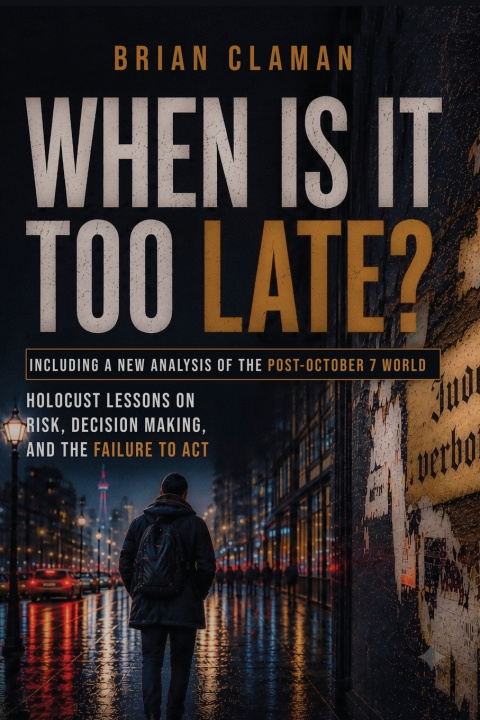
When Is It Too Late?
Holocaust Lessons on Risk, Decision Making, and the Failure to Act
 Englisch
 39 b
39 b
 Demnächst
 Neu
Neu
 Veröffentlichung 08. 09. 2026
Bis zu 30 Tage Rückgaberecht

The warning signs are rarely invisible. The danger is failing to recognize what they mean before it is too late.
When Is It Too Late? examines the growing challenges facing Jewish communities in the post-October 7 world through the lens of history, risk, and human decision-making.
Drawing lessons from the Holocaust and the years that preceded it, author Brian Claman explores how societies respond when antisemitism intensifies, institutions hesitate, warning signs are normalized, and people convince themselves that conditions will eventually improve.
This is not a book that argues history is repeating itself. It asks a more difficult question: what can history teach us about recognizing risk before events reach the point of no return?
Combining historical analysis, contemporary events, and principles of security risk management, When Is It Too Late? examines how individuals, communities, and leaders assess emerging threats-and why people so often delay difficult decisions even when the evidence around them is changing.
The book explores the normalization of antisemitism, the psychology of denial and social conformity, institutional responses to hatred and intimidation, the consequences of waiting for certainty, and the difficult choices confronting Jewish communities today.
At its heart is a lesson drawn from history: risk does not have to be certain before it deserves to be taken seriously.
Written for Jewish and non-Jewish readers alike, When Is It Too Late? is about more than antisemitism. It is about how people recognize danger, how societies become accustomed to what once seemed unacceptable, and how the lessons of the Holocaust can inform better decisions in the present.
History cannot tell us exactly what will happen next. But it can teach us what happens when warning signs are ignored.


Informationen zum Buch
Englisch
