
 Kontakt
 Wie einkaufen
Versand
Kaufberater
 Englisch
 309 b
309 b
Bis zu 30 Tage Rückgaberecht
Kunden kauften auch









 /
/
 Hardcover
 24.09
€
24.09
€







 /
Broschur
8.09
€
/
Broschur
8.09
€







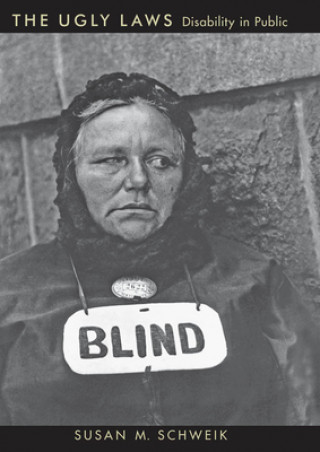
In the late-nineteenth and early-twentieth centuries, municipal laws targeting 'unsightly beggars' sprang up in cities across America. Seeming to criminalize disability and thus offering a visceral example of discrimination, these 'ugly laws' have become a sort of shorthand for oppression in disability studies, law and the arts. In this watershed study of the ugly laws, Susan M. Schweik uncovers the murky history behind the laws, situating the varied legislation in its historical context and exploring in detail what the laws meant. Illustrating how the laws join the history of the disabled and the poor, Schweik not only gives the reader a deeper understanding of the ugly laws and the cities where they were generated, she locates the laws at a crucial intersection of evolving and unstable concepts of race, nation, sex, class, and gender. Moreover, she explores the history of resistance to the ordinances, using the often harrowing life stories of those most affected by their passage. Moving to the laws' more recent history, Schweik analyzes the shifting cultural memory of the ugly laws, examining how they have been used - and misused - by academics, activists, artists, lawyers, and legislators. Drawing from a huge range of cultural materials, from police reports and court dockets to popular fiction and reformist exposes, Schweik rewrites an urban legend about disability into a meticulously researched and powerfully reasoned argument about law, politics, and cultural aesthetics. Building a case in ever expanding circles until she is in a position to rethink large swaths of United States culture through the lens of the ugly laws, Schweik casts a bright light on the conditions of disability at the turn of the century in order to better understand disability in the present.


Informationen zum Buch
Englisch

Verschenken Sie dieses Buch noch heute
Es ist ganz einfach
1 Legen Sie das Buch in Ihren Warenkorb und wählen Sie den Versand als Geschenk 2 Wir schicken Ihnen umgehend einen Gutschein 3 Das Buch wird an die Adresse des beschenkten Empfängers geliefertDas könnte Sie auch interessieren

























Hallo! Ich bin Libroamiko, dein Buchberater.
Wie kann ich dir helfen?