
 Kontakt
 Wie einkaufen
Versand
Kaufberater
 Englisch
 29 b
29 b
 Demnächst
 Neu
Neu
Bis zu 30 Tage Rückgaberecht

A princess gave birth to twin sons. Her uncle, fearing they would one day challenge his throne, ordered them drowned in a flooding river. They survived, raised by a wolf, and grew up to found a city. That city went on to rule most of the known world.
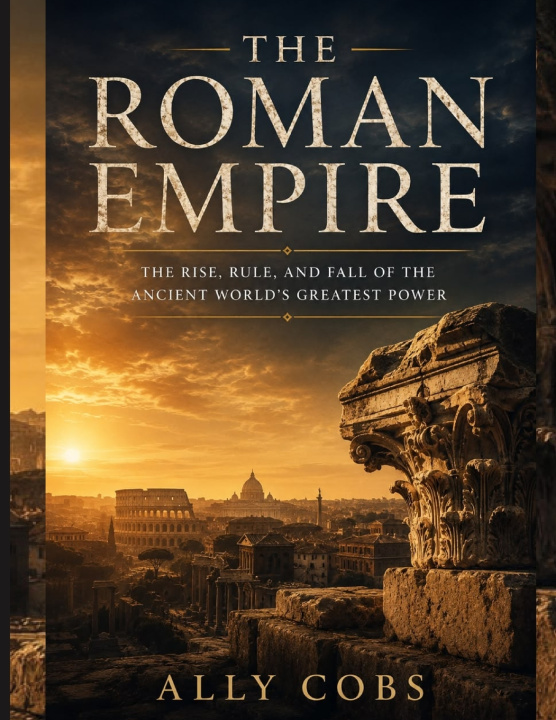
The Roman Empire tells the story of how an unremarkable town on the banks of the Tiber became the dominant power of the ancient Mediterranean, stretching from the fringes of the Sahara to the frontiers of northern Britain, from the coast of Spain to the banks of the Nile. This is not simply a chronicle of emperors and battles. It is the story of how Rome built an empire by absorbing the people it conquered rather than merely ruling over them, turning defeated enemies into allies, and allies into citizens who eventually numbered in the tens of millions.
Readers will follow Rome from its mythical origins through the fall of the Republic, the rise of Augustus and the birth of one man rule, and the vast infrastructure of roads, aqueducts, and trade routes that connected three continents into a single functioning world. The book explores how ordinary people, provincial governors, enslaved miners, soldiers, and merchants, experienced life within the empire, and how Roman citizenship became one of the most radical ideas of the ancient world. It follows the empire's uneasy relationship with the gods it worshipped and the new faith that eventually replaced them, the chaos of the third century crisis, and the emperor who chose to align Roman power with Christianity rather than fight against it. It closes with the gradual transformation of the western empire, a process far more complicated than the popular image of barbarian invasion and sudden collapse.
Understanding Rome means understanding questions that remain strikingly relevant today: how power builds and justifies itself, what a state owes the people it governs, and where the boundaries of belonging should lie. This book draws on archaeology, inscriptions, and the physical remains the Romans left behind to bring that history to life, from the grandeur of the Pantheon to the tombstone of a four year old child who died working in a Spanish silver mine.
For readers who want a clear, engaging, and historically grounded account of how Rome rose, ruled, and ultimately transformed into something new, this book offers a complete journey through one of history's most consequential empires, written for anyone encountering the subject for the first time and for anyone who wants to understand it more deeply.


Informationen zum Buch
Englisch

Verschenken Sie dieses Buch noch heute
Es ist ganz einfach
1 Legen Sie das Buch in Ihren Warenkorb und wählen Sie den Versand als Geschenk 2 Wir schicken Ihnen umgehend einen Gutschein 3 Das Buch wird an die Adresse des beschenkten Empfängers geliefertHallo! Ich bin Libroamiko, dein Buchberater.
Wie kann ich dir helfen?