
 Kontakt
 Wie einkaufen
Versand
Kaufberater
 Englisch
 28 b
28 b
 Demnächst
 Neu
Neu
Bis zu 30 Tage Rückgaberecht

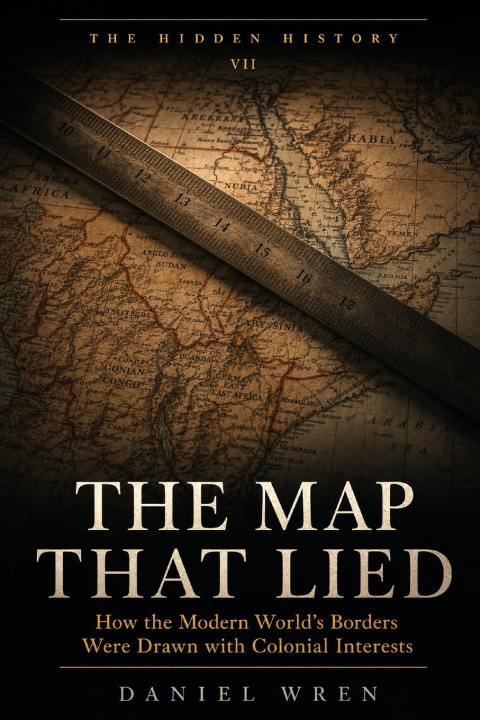
In 1916, a British diplomat drew a line across a map with his thumb. He had never administered a single acre of the territory he was dividing. Neither had the French official sitting across the table. Between them, working from a map made for artillery officers rather than for people, they decided the future of a region neither of them fully understood, and they told almost no one they had done it.
That line is still there. So are the wars.
The Map That Lied traces the Sykes-Picot Agreement from the room where it was signed to the borders that still define the modern Middle East, and asks the question official histories have spent a century declining to answer clearly: what happens when the people who draw a border have no obligation to live inside it. Along the way, the book follows the specific decisions, the specific documents, and the specific people, an ambitious young diplomat, an intelligence officer who knew more than he could say, a woman whose expertise was consulted and then ignored, whose choices accumulated into an architecture that has outlived every one of them.
The investigation does not stop at one region. Three further cases, drawn from Africa, South Asia, and the Indian subcontinent, extend the same forensic method to a continent divided in a single winter, a border that has never been fully accepted by the people it splits, and a partition completed in five weeks by a man who left the country before the consequences arrived. Each case follows the same rule this series has built its reputation on: no conspiracy, no speculation, only the documented record and the plain question of what it actually shows.
This is not a book about villains. It is a book about incentives, about the very ordinary human tendency to solve the problem directly in front of you and let someone else, somewhere else, sometime later, inherit what you built. The people in these pages are diplomats, administrators, and negotiators, most of them competent, some of them well-intentioned, all of them working inside a system that rewarded speed and discretion over consultation and care.
Readers of narrative nonfiction that trusts them with primary sources rather than conclusions will recognize the method immediately: patient reconstruction, calm prose, and a refusal to look away from what the documents actually say. The Map That Lied does not tell you what to think about the borders you have inherited. It shows you exactly how they were drawn, and lets you decide what that means.
Part of The Hidden History series. Each book stands alone.


Informationen zum Buch
Englisch
