
 Kontakt
 Wie einkaufen
Versand
Kaufberater
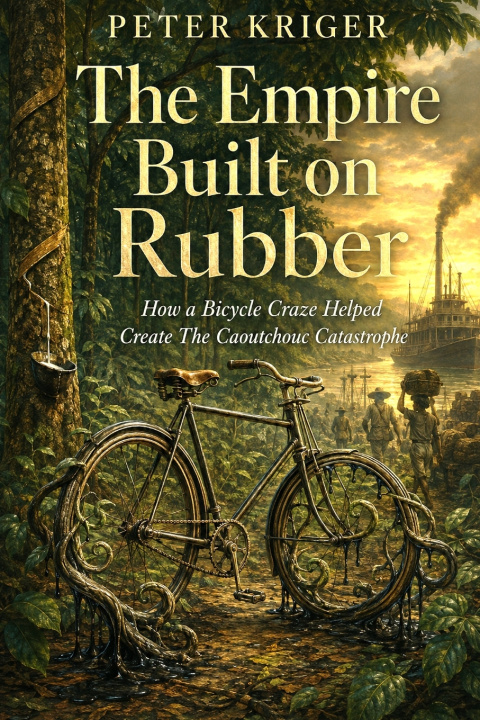
THE EMPIRE BUILT ON RUBBER
HOW A BICYCLE CRAZE HELPED CREATE THE CAOUTCHOUC CATASTROPHE
 Englisch
 37 b
37 b
 Demnächst
 Neu
Neu
Bis zu 30 Tage Rückgaberecht

In the autumn of 1887, a Belfast veterinarian watched his ten-year-old son come home from a ride with a headache, and decided to do something about it. He rolled a sheet of rubber into a tube, wrapped it in linen, tacked it to a wooden disc, and pumped it up with a football inflator. Then he rolled it across the yard beside a solid tire pried off the boy's tricycle. The solid tire wobbled and lay down. The inflated one crossed the yard and hit the far gate.
That experiment took an afternoon. What followed took twenty years, three continents, and a number of dead people that nobody has ever managed to count.
This is the story of how the most charming machine of the nineteenth century collided with a substance that grew wild in the equatorial forest and could not be made to grow faster. The bicycle put women in trousers, emptied churches on Sunday mornings, and widened the marriage map of rural Europe. It also quadrupled the world's appetite for rubber inside two decades, at a moment when rubber came from scattered trees and vines that no amount of money could persuade to multiply. Demand went vertical. Supply could not follow. Into the gap stepped men with quotas to fill and no reason to care how they filled them.
Here are tires and patent lawsuits, a stock promoter who rented dukes by the afternoon, a stolen suitcase of seeds, an opera house rotting in the jungle, a Liverpool shipping clerk who destroyed a king with a column of figures, and the uncomfortable discovery that the killing stopped not when consciences improved but when the trees were finally planted in rows.
It is also, unavoidably, a book about the present. The same shape is visible in cobalt, in lithium, and in the dust your tires are leaving in the storm drain this afternoon, which is killing salmon in a way that nobody chose and almost nobody knows about.
A book about a fad, a fungus, and a fortune - and about what happens at the far end of a supply chain long enough that nobody has to look.
Keywords: rubber, bicycles, Congo, colonialism, supply chains, industrial history, commodities


Informationen zum Buch
Englisch
Kategorie
