
Werden Sie Teil einer Gemeinschaft von Buchliebhabern aus der ganzen Welt und erhalten Sie eine Reihe von Vorteilen.
Konto kostenlos anlegen
DPD-Kurier 4.49 €
Hermes Kurierdienst 4.99 €
DHL-Kurier 3.99 €
Hermes-Stelle 4.49 €
DPD-Stelle 2.99 €
GLS-Kurierdienst 4.99 €
 Kontakt
 Wie einkaufen
Hilfe
Versand
DPD-Kurier 4.49 €
Hermes Kurierdienst 4.99 €
DHL-Kurier 3.99 €
Hermes-Stelle 4.49 €
DPD-Stelle 2.99 €
GLS-Kurierdienst 4.99 €
Kaufberater
Mein Konto
▸
Leer :-(
0
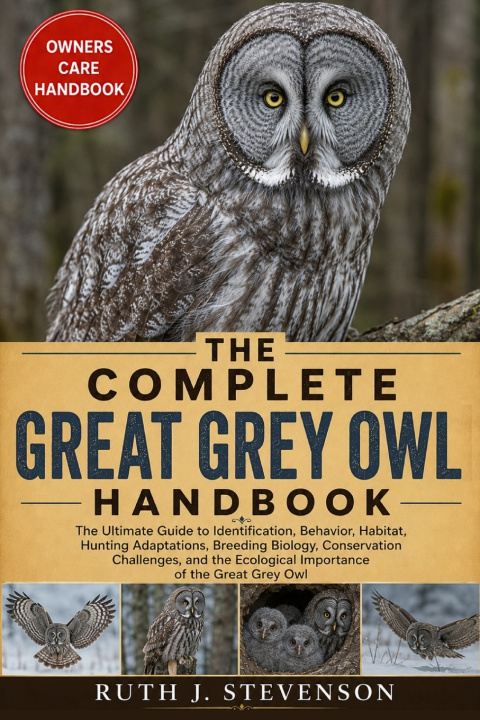
THE COMPLETE GREAT GREY OWL HANDBOOK
The Ultimate Guide to Identification, Behavior, Habitat, Hunting Adaptations, Breeding Biology, Conservation Challenges, and the Ecological Importance of the Great Grey Owl
Sprache
 Englisch
Englisch
Buch
Broschur
Introduction to the Great Grey OwlOverview of the Great Grey OwlThe Great Grey Owl is one of the mos...
Vollständige Beschreibung
Libristo-Code: 53016997
?
 39 b
39 b
 Neu
Neu
39 b
Neu
16.09
€
inkl. MwSt.
Externes Lager
Wir versenden in 14-21 Tagen
Bis zu 30 Tage Rückgaberecht

Introduction to the Great Grey Owl
Overview of the Great Grey Owl
The Great Grey Owl is one of the most impressive and mysterious owl species in the world. Known for its enormous facial disc, striking appearance, and exceptional hunting abilities, this bird inhabits vast forests across North America, Europe, and Asia. Despite being one of the tallest owl species by length, much of its apparent size comes from its thick plumage rather than body mass. This unique combination of size, beauty, and stealth has earned the Great Grey Owl a special place among the world's most admired birds of prey.The species is primarily associated with boreal and coniferous forests, where it thrives in landscapes characterized by dense woodlands, open meadows, wetlands, and forest clearings. These habitats provide the owl with suitable nesting sites and abundant prey populations. Unlike many birds that rely heavily on daylight, the Great Grey Owl is adapted for hunting during low-light conditions, often becoming active at dawn, dusk, and throughout the night. Its remarkable sensory adaptations allow it to detect prey hidden beneath snow, vegetation, or forest debris.
The Great Grey Owl is an apex predator within many of the ecosystems it inhabits. Its diet consists mainly of small mammals such as voles, mice, and other rodents. Through its hunting activities, the owl helps regulate prey populations and contributes to maintaining ecological balance. This role makes it an important component of healthy forest ecosystems. The species' ability to locate prey using sound alone is considered one of the most remarkable hunting adaptations found among birds.
Although the Great Grey Owl can be found across a broad geographic range, it often remains difficult to observe due to its quiet nature and preference for remote habitats. Birdwatchers and wildlife photographers frequently regard sightings as memorable experiences because of the owl's majestic appearance and calm demeanor. The combination of ecological importance, specialized adaptations, and captivating beauty makes the Great Grey Owl one of the most fascinating birds in the natural world.
Scientific Classification and Taxonomy
The Great Grey Owl belongs to the order Strigiformes, the group that includes all owl species. Within this order, it is classified in the family Strigidae, commonly known as the typical owl family. This family contains the majority of owl species found around the world and includes a wide variety of birds adapted to different habitats and hunting strategies. The Great Grey Owl is scientifically known as Strix nebulosa, a name that reflects both its taxonomic placement and distinctive appearance.
Schauspielerin
&
Polyglotte
EWA KASP
für
Video abspielen


Libristo bietet die größte Auswahl an fremdsprachiger Literatur an. Deshalb kaufe ich meine Bücher hier ein.
Informationen zum Buch
Vollständiger Name
THE COMPLETE GREAT GREY OWL HANDBOOK
Autor
RUTH J. STEVENSON
Sprache
Englisch
Englisch
Einband
Buch - Broschur
Datum der Veröffentlichung
2026
Anzahl der Seiten
158
EAN
9798184219127
Libristo-Code
53016997
Verlag
Independently published
Gewicht
222
Abmessungen
152 x 229 x 9
Kategorie

Verschenken Sie dieses Buch noch heute
Es ist ganz einfach
1 Legen Sie das Buch in Ihren Warenkorb und wählen Sie den Versand als Geschenk 2 Wir schicken Ihnen umgehend einen Gutschein 3 Das Buch wird an die Adresse des beschenkten Empfängers geliefert
Buchberater Libroamiko
Durch die Nutzung dieses Chats kommunizieren Sie mit generativer künstlicher Intelligenz. Mit der Nutzung erklären Sie sich auch mit der Verarbeitung personenbezogener Daten einverstanden.
Hallo! Ich bin Libroamiko, dein Buchberater.
Wie kann ich dir helfen?
Hallo, ich bin Libroamiko, kann ich helfen?