
 Kontakt
 Wie einkaufen
Versand
Kaufberater
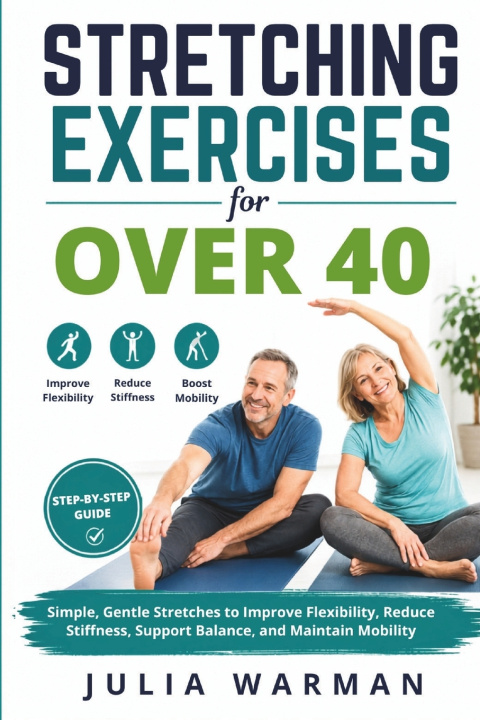
Stretching Exercises for Over 40
Simple, Gentle Stretches to Improve Flexibility, Reduce Stiffness, Support Balance, and Maintain Mobility
 Englisch
 45 b
45 b
 Demnächst
 Neu
Neu
Bis zu 30 Tage Rückgaberecht

Would you like to stay active and flexible throughout your 40s, 50s, 60s, and beyond, but are unsure how to begin stretching safely?
Are stiffness, limited mobility, or everyday aches making ordinary movements more difficult than they used to be?
Discover a Gentle, Practical Approach to Stretching After 40As the years pass, muscles and joints may begin to feel tighter. Bending, reaching, turning, getting out of bed, or completing household activities can require more effort.
Although stretching cannot stop aging, a suitable routine may help you maintain flexibility, move more comfortably, improve your range of motion, and feel more confident during everyday activities.
The challenge is knowing which stretches to perform, how long to hold them, and how to adapt them to your present abilities.
Stretching Exercises for Over 40 provides clear, step-by-step guidance for adults who want to begin or return to stretching without complicated workouts or demanding gym sessions.
This book is for you if:
Your muscles and joints often feel tight or stiff
You have become less active or flexible with age
You find many exercise programs too intense
You are unsure how to stretch with proper form
You want exercises that can be adapted to your mobility
You need a simple routine you can practise at home
You want to support your balance, posture, and everyday movement
Inside, you will discover:
Why flexibility and mobility can become more important as you age
How stretching affects your muscles, joints, posture, and range of motion
The differences between static, dynamic, active, and passive stretching
How to warm up before stretching
Step-by-step stretches for major areas of the body
Gentle movements for the neck, shoulders, arms, back, hips, legs, knees, and ankles
Seated and supported options for people with limited mobility
How long to hold a stretch and how often to practise
How to recognize the difference between normal tension and warning pain
Common stretching mistakes and practical ways to avoid them
How to breathe and maintain proper alignment during each movement
Ways to modify stretches according to your strength and flexibility
Simple routines for the morning, evening, or after prolonged sitting
Stretching approaches that may support relaxation and everyday comfort
Exercises that can complement balance and mobility training
How to create a realistic routine that fits your schedule
Safety precautions and signs that you should stop or seek professional advice
You do not need to be naturally flexible, own expensive equipment, or spend hours exercising. You can begin gradually, work within a comfortable range, and build consistency one movement at a time.
Even if you have not exercised recently, feel unusually stiff, or believe you are too old to improve your flexibility, the beginner-friendly guidance will help you start at an appropriate pace.
Stretching cannot cure medical conditions or guarantee freedom from pain or falls. However, when performed appropriately and combined with suitable strength, balance, and cardiovascular activity, it can become a valuable part of an active lifestyle.
If you have an injury, chronic condition, balance difficulty, recent surgery, or unexplained pain, consult a qualified healthcare professional before beginning a new exercise routine.
Take the first step toward moving more freely, comfortably, and confidently as you age.
Scroll up and click Buy Now to begin your stretching journey today.


Informationen zum Buch
Englisch
