Kontakt
 Wie einkaufen
Versand
Kaufberater
 Englisch
 346 b
346 b
Bis zu 30 Tage Rückgaberecht
Kunden kauften auch
































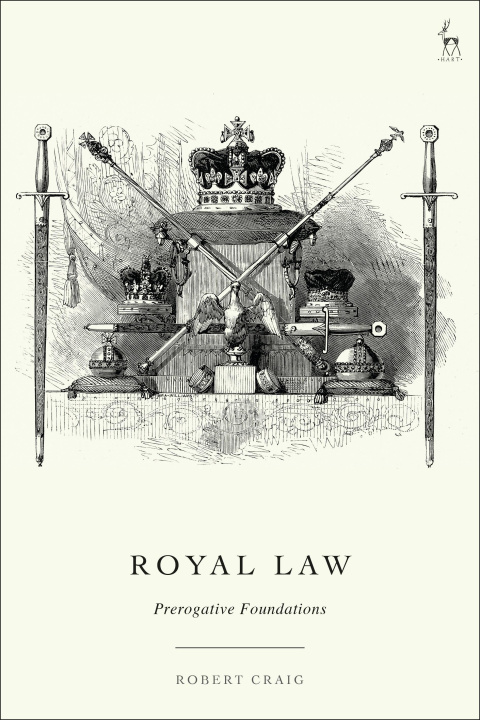
This book argues that prerogative powers encompass all the non-statutory powers of the Crown. Hence the Crown has no ''third source'' powers, common law powers or ''Ram doctrine'' style freedoms.
Royal Law builds on Dicey''s definition of the prerogative, arguing that it comprises all residual non-statutory rights, powers, duties, and immunities historically ascribed to the Crown. However, it contends that Blackstone’s alternative definition, that prerogative powers are only those powers exclusive to the Crown, is also correct. The book explains how Dicey and Blackstone can be reconciled.
The prerogative of justice is suggested as the original source of legal authority and legitimacy of common law judicial decisions. Common law is, or was, royal law. Defined as a putative non-statutory, non-prerogative third source of judicial legitimacy, authority or jurisdiction, ''common law'' does not exist. There are only two ultimate sources of jurisdictional authority: statute and prerogative.
The book further argues that Wade was mistaken to contend that the Crown has ''common law powers''. It also has no ''third source freedoms'', as suggested by Harris, or in the ''Ram Doctrine’. The book therefore reframes the relevant case law as examples of judicial regulation of prerogative powers, crucially including the largely-forgotten prerogative power to administer the realm. Hence the book concludes that legal powers such as a minister''s power to enter contracts or make ex gratia payments of public money, are directly or indirectly grounded in prerogative power.


Informationen zum Buch
Englisch

Verschenken Sie dieses Buch noch heute
Es ist ganz einfach
1 Legen Sie das Buch in Ihren Warenkorb und wählen Sie den Versand als Geschenk 2 Wir schicken Ihnen umgehend einen Gutschein 3 Das Buch wird an die Adresse des beschenkten Empfängers geliefertDas könnte Sie auch interessieren


 /
/
 Broschur
 17.09
€
17.09
€

 /
Broschur
51.29
€
/
Broschur
51.29
€













 /
/
 Karten
19.09
€
Karten
19.09
€