
 Kontakt
 Wie einkaufen
Versand
Kaufberater
 Englisch
 88 b
88 b
Bis zu 30 Tage Rückgaberecht
Kunden kauften auch













 /
/
 Broschur
 50.09
€
50.09
€






 /
Broschur
15.95
€
/
Broschur
15.95
€
 /
Broschur
129.90
€
/
Broschur
129.90
€

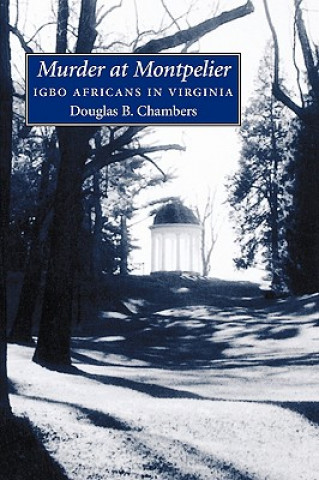
Murder at Montpelier: Igbo Africans in Virginia by Douglas B. Chambers. In 1732 Ambrose Madison, grandfather of the future president, languished for weeks in a sickbed then died. The death, soon after his arrival on the plantation, bore hallmarks of what planters assumed to be traditional African medicine. African slaves were suspected of poisoning their master. For Montpelier, his estate, and for Virginia, this was a watershed moment. Murder at Montpelier: Igbo Africans in Virginia explores the consequences of Madison's death and the ways in which this event shaped both white slaveholding society and the surrounding slave culture. At Montpelier, now owned by the National Trust for Historic Preservation and open to the public, Igbo slaves under the directions of white overseers had been felling trees, clearing land, and planting tobacco and other crops for five years before Madison arrived. This deadly initial encounter between American colonial master and African slave community irrevocably changed both whites and blacks. This book explores the many broader meanings of this suspected murder and its aftermath. It weaves together a series of transformations that followed, such as the negotiation of master-slave relations, the transformation of Igbo culture in the New World, and the social memory of a particular slave community. For the first time, the book presents the larger history of the slave community at James Madison's Montpelier, over the five generations from the 1720s through the 1850s and beyond. Murder at Montpelier revises many assumptions about how Africans survived enslavement, the middle passage, and grueling labor as chattel in North America. The importance of Igbo among the colonial slave population makes this work a controversial reappraisal of how Africans made themselves "African Americans" in Virginia. Douglas B. Chambers is a professor of history at the University of Southern Mississippi.


Informationen zum Buch
Englisch

Verschenken Sie dieses Buch noch heute
Es ist ganz einfach
1 Legen Sie das Buch in Ihren Warenkorb und wählen Sie den Versand als Geschenk 2 Wir schicken Ihnen umgehend einen Gutschein 3 Das Buch wird an die Adresse des beschenkten Empfängers geliefertDas könnte Sie auch interessieren
 /
Broschur
12.19
€
/
Broschur
12.19
€
 /
Broschur
15.99
€
/
Broschur
15.99
€











 /
Broschur
101.79
€
/
Broschur
101.79
€








Hallo! Ich bin Libroamiko, dein Buchberater.
Wie kann ich dir helfen?