Kontakt
 Wie einkaufen
Versand
Kaufberater
 Englisch
 114 b
114 b
30 Tage für die Rückgabe der Ware
Kunden kauften auch















 /
/
 Broschur
 14.90
€
14.90
€


 /
Broschur
51.19
€
/
Broschur
51.19
€


 /
Broschur
8.89
€
/
Broschur
8.89
€




 /
Broschur
18.09
€
/
Broschur
18.09
€

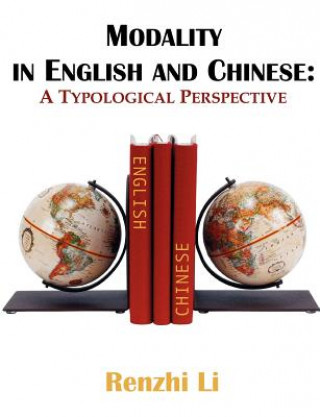
Modality is a grammatical, or semantic-grammatical, category. It is an important component of human languages. This is at least the case in most European languages. To what extent is it a near-universal? This thesis is to contribute to the question. It focuses on modal verbs in English and Chinese, two genetically and geographically unrelated languages, and analyzes what these two languages have in common and how they differ in their systems of modality. To achieve the aim, the thesis adopts the theoretical framework proposed by van der Auwera (1996, 1998 with Plungian, 2001) for the typological study of modality. Its language-specific descriptions involve the morphosyntactic features, notional functions, modal logic, and diachronic development. With these descriptions, it constructs a cross-linguistic database in a uniform, parallel structure. Then on the basis of this database, it deals with the cross-linguistic issues about modality in English and Chinese. Like many of the studies in this area, this research makes use of the well-sampled data in the relevant literature, thereby assuring the same degree of representativeness. When the data do not meet this need, it resorts to computer-based corpora. In the diachronic study of Chinese modality, quantitative analysis is adopted in proposing a development path for the senses of a modal. English translation is given particular attention in the description of Chinese modality and cross-linguistic analyses. One can only know one's own language only if one compares it with other languages. The present study is conducive to a better understanding of English and Chinese. It contributes not only to the investigation of language universals, but also to the study of human cognition and other linguistic or applied linguistic issues.


Informationen zum Buch
Englisch

Verschenken Sie dieses Buch noch heute
Es ist ganz einfach
1 Legen Sie das Buch in Ihren Warenkorb und wählen Sie den Versand als Geschenk 2 Wir schicken Ihnen umgehend einen Gutschein 3 Das Buch wird an die Adresse des beschenkten Empfängers geliefertDas könnte Sie auch interessieren
 /
Hardcover
23.99
€
/
Hardcover
23.99
€







 /
Broschur
13.09
€
/
Broschur
13.09
€









 /
Hardcover
20.09
€
/
Hardcover
20.09
€