
 Kontakt
 Wie einkaufen
Versand
Kaufberater
 Englisch
 21 b
21 b
 Neu
Neu
Bis zu 30 Tage Rückgaberecht

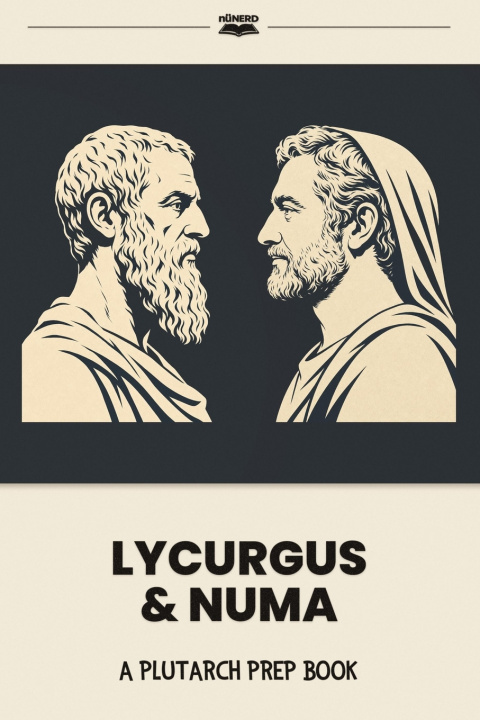
Two lawgivers rebuilt two broken cities, one by force, one by trust, and five hundred years later only one of their systems was still standing. Plutarch will not let you call that the final verdict, however.
Your young reader won't come away just knowing two more ancient names. They'll practice a harder skill: holding two rival standards of greatness in mind at once and weighing which one a city, or a person, should be built on. Every chapter stages a direct comparison instead of a straight two-lives march, and every chapter hands the weighing back to the reader.
The evidence has teeth. When Sparta's rich turned violent and a mob's blow cost Lycurgus an eye, he didn't turn on the crowd. He took his attacker into his own house and, by nothing more than the way he lived, turned his bitterest enemy into one of his most devoted followers. Later he locked his laws in place with his own death, chosen deliberately, so his city could never be released from its vow to keep them. Numa, told that enemies were approaching Rome, only smiled and answered, "And I am sacrificing." His Rome kept an unbroken peace for forty-three years, and that peace ended the day he died.
Most retellings at this level pick a winner or duck the question. This one puts the two men in the ring the way Plutarch did and makes your reader keep score honestly, foresight against foresight, cruelty against cruelty, including the places where Plutarch admits the record can't be trusted. That's a head start on the kind of comparative judgment most books postpone until high school.
What This Version DoesThis is the top reading level of the series, built for readers ready to sit inside an argument instead of just following a plot. It works directly from the comparison Plutarch wrote for the pair, which crowns no simple winner, and asks the reader to weigh his stated leans against the evidence, then decide whether durability or humanity should settle the contest. No easy answer is supplied.
Ages 10 to 14 · 88 pages · about 9,300 words · Flesch-Kincaid grade 7.4 · 18 black-and-white woodcut illustrations · independent reading.
A note for parents. This is the advanced rung, and it does not soften the evidence, because the weighing depends on it. It names plainly what Plutarch named: a widow's offer to destroy the infant heir, refused by Lycurgus; the mob violence that cost him an eye; his deliberate self-starvation, chosen to seal Sparta's oath forever; and the Helots, the conquered people Sparta enslaved, including the killings of the Crypteia. Cruelty is weighed as evidence, never dramatized.
Part of the nüNERD Learning System. Every Plutarch pair comes at four reading levels, each built for how children actually think at that stage, never a leveled-down rewrite. Ages 0–4 plant one vivid way of living from each city. Ages 3–7 set the two cities side by side. Ages 6–10 tell both lives in full and begin to weigh them. And here, at 10 to 14, the reader walks the last mile to Plutarch's own pages, ready to open a grown-up translation and already knowing how to argue with it.
Also available for Ages 0–4 (A Plutarch Toddler Book), Ages 3–7 (A Plutarch Picture Book), and Ages 6–10 (A Plutarch Chapter Book).


Informationen zum Buch
Englisch

Verschenken Sie dieses Buch noch heute
Es ist ganz einfach
1 Legen Sie das Buch in Ihren Warenkorb und wählen Sie den Versand als Geschenk 2 Wir schicken Ihnen umgehend einen Gutschein 3 Das Buch wird an die Adresse des beschenkten Empfängers geliefertHallo! Ich bin Libroamiko, dein Buchberater.
Wie kann ich dir helfen?