
 Kontakt
 Wie einkaufen
Versand
Kaufberater
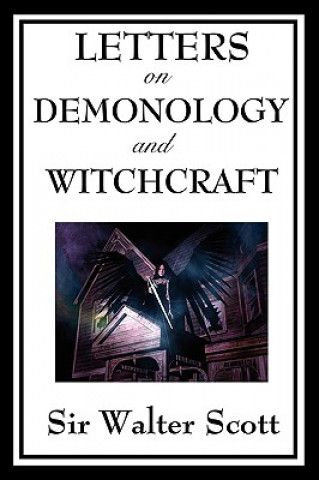
Letters on Demonology and Witchcraft
 Englisch
 40 b
40 b
Bis zu 30 Tage Rückgaberecht
Kunden kauften auch









 /
/
 Broschur
 7.99
€
7.99
€







 /
Broschur
17.95
€
/
Broschur
17.95
€

In ill health following a stroke, Sir Walter Scott wrote Letters on Demonology and Witchcraft at the behest of his son-in-law, J. G. Lockhart, who worked for a publishing firm. The book proved popular and Scott was paid six hundred pounds, which he desperately needed. (Despite his success as a novelist, Scott was almost ruined when the Ballantyne publishing firm, where he was a partner, went bankrupt in 1826.) Letters was written when educated society believed itself in enlightened times due to advances in modern science. Letters, however, revealed that all social classes still held beliefs in ghosts, witches, warlocks, fairies, elves, diabolism, the occult, and even werewolves. Sourcing from prior sixteenth- and seventeenth-century treatises on demonology along with contemporary accounts from England, Europe, and North America (Cotton Mather's Magnalia Christi, for one), Scott's discourses on the psychological, religious, physical, and preternatural explanations for these beliefs are essential reading for acolytes of the dark and macabre; the letters dealing with witch hunts, trials (Letters Eight and Nine), and torture are morbidly compelling. Scott was neither fully pro-rational modernity nor totally anti-superstitious past, as his skepticism of one of the "new" sciences (skullology, as he calls it) is made clear in a private letter to a friend. Thus, Letters is both a personal and intellectual examination of conflicting belief systems, when popular science began to challenge superstition in earnest.


Informationen zum Buch
Englisch

Verschenken Sie dieses Buch noch heute
Es ist ganz einfach
1 Legen Sie das Buch in Ihren Warenkorb und wählen Sie den Versand als Geschenk 2 Wir schicken Ihnen umgehend einen Gutschein 3 Das Buch wird an die Adresse des beschenkten Empfängers geliefertDas könnte Sie auch interessieren








 /
Hardcover
181.09
€
/
Hardcover
181.09
€



 /
Broschur
28.29
€
/
Broschur
28.29
€








Hallo! Ich bin Libroamiko, dein Buchberater.
Wie kann ich dir helfen?