
 Kontakt
 Wie einkaufen
Versand
Kaufberater
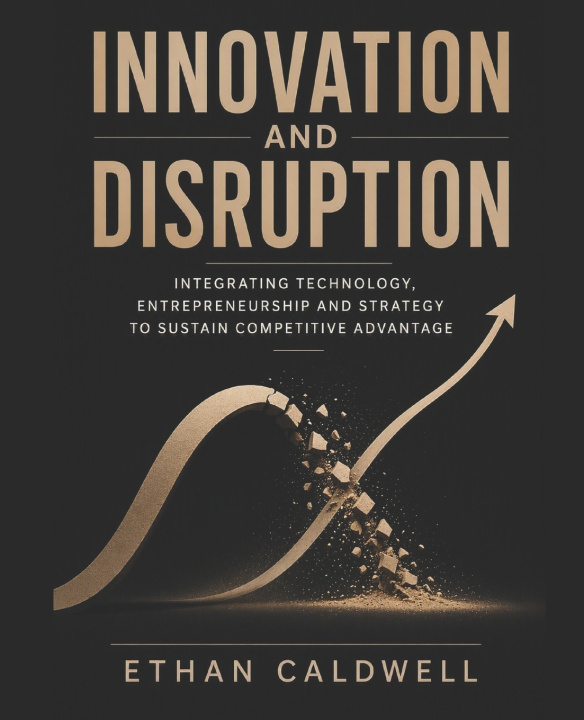
Innovation and Disruption
Integrating Technology, Innovation and Entrepreneurship to Sustain Competitive Advantage
 Englisch
 63 b
63 b
 Demnächst
 Neu
Neu
Bis zu 30 Tage Rückgaberecht

Technological change is accelerating. Entire industries are being transformed by new business models, digital platforms, artificial intelligence, shifting customer expectations, and entrepreneurial challengers that emerge from seemingly nowhere. Yet despite unprecedented access to information, many organizations still struggle to recognize disruption early, transform ideas into innovation, and translate technological advances into sustainable competitive advantage.
This book provides a comprehensive framework for understanding how technology, innovation, entrepreneurship, and strategy interact in a rapidly changing world. Rather than treating these disciplines as separate subjects, the book demonstrates how they combine to determine whether organizations thrive, adapt, or decline.
The book begins by exploring the nature of technological change and disruption. Readers discover why dominant organizations often fail to respond to emerging technologies, how disruptive innovations reshape industries, and why established success can become a barrier to future renewal. Through classic and contemporary examples, the book explains the mechanisms behind technological revolutions, competitive shifts, and the rise of new market leaders.
Building on these foundations, the focus shifts to opportunity recognition and innovation management. Organizations rarely fail because change is invisible; they fail because weak signals are ignored, assumptions go unchallenged, or promising ideas never receive the support needed to become reality. The book examines how opportunities are identified, how uncertainty can be managed, and how leaders can foster environments where creativity, experimentation, and learning become part of everyday practice.
Innovation, however, is not limited to generating ideas. Success requires the ability to transform opportunities into products, services, business models, and capabilities that create value. Readers are introduced to proven frameworks for product development, customer understanding, innovation portfolios, experimentation, open innovation, and organizational learning. Equally important, the book explores why many innovation initiatives fail and how organizations can overcome the structural, cultural, and strategic barriers that stand in the way of renewal.
Entrepreneurship forms another essential pillar of the discussion. Whether inside a start-up, a scale-up, or a large corporation, entrepreneurial thinking enables organizations to navigate uncertainty, discover unmet needs, and create new sources of growth. The book examines entrepreneurial decision-making, business model innovation, customer discovery, opportunity evaluation, resource mobilization, and the practical realities of building sustainable ventures in dynamic environments.
The final part connects innovation and entrepreneurship to the broader discipline of strategic management. Sustainable success depends not only on recognizing opportunities but also on building capabilities that allow organizations to respond repeatedly to change. Topics such as competitive advantage, dynamic capabilities, strategic renewal, organizational ambidexterity, ecosystems, stakeholder management, and responsible innovation are explored in depth. Together they provide a roadmap for balancing short-term performance with long-term adaptability.
Throughout the book, theory is combined with practical frameworks, management tools, and lessons derived from decades of research and real-world experience. The result is an integrated perspective that helps readers connect technological developments, innovation processes, entrepreneurial action, and strategic decision-making into a coherent management approach.


Informationen zum Buch
Englisch

Verschenken Sie dieses Buch noch heute
Es ist ganz einfach
1 Legen Sie das Buch in Ihren Warenkorb und wählen Sie den Versand als Geschenk 2 Wir schicken Ihnen umgehend einen Gutschein 3 Das Buch wird an die Adresse des beschenkten Empfängers geliefertHallo! Ich bin Libroamiko, dein Buchberater.
Wie kann ich dir helfen?