
 Kontakt
 Wie einkaufen
Versand
Kaufberater
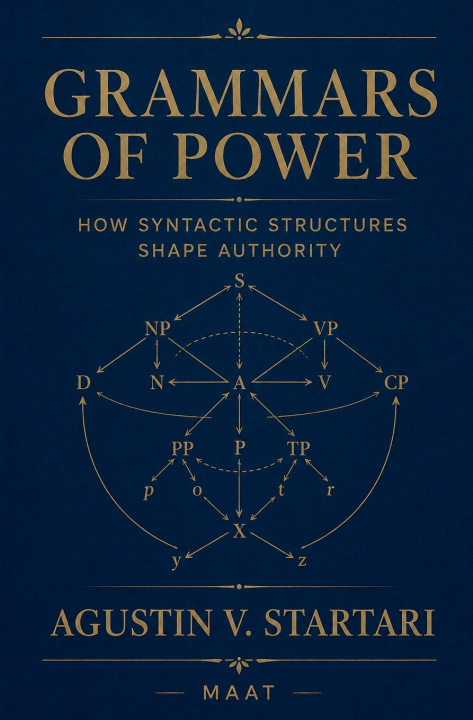
Grammars of Power
 Englisch
 34 b
34 b
 Neu
Neu
Bis zu 30 Tage Rückgaberecht

In a world where power is exercised through both weapons and words, Grammars of Power: How Syntactic Structures Shape Authority offers an unprecedented investigation into the relationship between the form of language and the exercise of domination. Spanning ecclesiastical, political, legal, and totalitarian discourse, this work demonstrates how grammatical choices-such as the use of passives, impersonal constructions, subordinate clauses, or deontic statements-are never neutral: they shape the perception of reality, obscure agents of power, and reinforce symbolic hierarchies.
From papal bulls to court rulings, from imperial proclamations to Nazi and Stalinist rhetoric, the book reveals that syntax is a political technology as sophisticated as any system of physical control. Supported by tools from discourse analysis, formal logic, computational linguistics, and historical corpora, Grammars of Power offers a new critical perspective on the invisible mechanisms that regulate thought through language.
Combining theoretical clarity with academic rigor, this work not only examines the past, but also provides tools for interpreting the language of contemporary power-from algorithms to state discourse-at a time when words have once again become a battleground.
Work Papers is a publication series that brings together independent research on power, ideology, legitimacy, and history from a transversal and interdisciplinary perspective. Each volume stands as an autonomous work, while contributing to a common thread: the critical analysis of how power is structured, exercised, and sustained over time.
From Ancient Egypt to the totalitarian regimes of the twentieth century, from medieval theology to contemporary algorithms, this series explores the historical, linguistic, technological, and symbolic mechanisms that shape our societies. Power is understood here as a deep structure that traverses institutions, languages, myths, technologies, and bodies.
Each volume is numbered according to its place in this evolving series. Working Papers thus offers an intellectual architecture through which the reader can explore various forms of domination and resistance-from the most visible to the most invisible.


Informationen zum Buch
Englisch
