
 Kontakt
 Wie einkaufen
Versand
Kaufberater
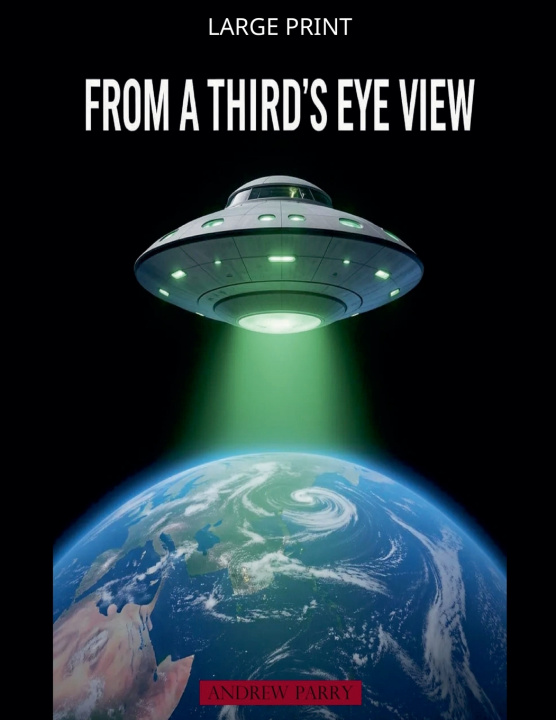
From a Third's Eye View
 Englisch
 108 b
108 b
 Demnächst
 Neu
Neu
Bis zu 30 Tage Rückgaberecht

From the imaginative mind of Andrew Parry comes a speculative fiction about what Earth looks like From an Alien Perspective.
What would Earth look like to an intelligence that had never been born here?
Imagine for a moment that you are not human. You are a visitor from another world, arriving from a civilization that may have existed for millions of years. The distances between stars that seem almost impossible to humanity are simply obstacles your technology has learned to overcome. Your civilization has mastered forms of transportation, communication, medicine, energy, and environmental engineering that humans might consider miraculous. You observe Earth from above, studying its oceans, continents, cities, atmosphere, wildlife, and billions of inhabitants. You do not immediately judge what you see, because you have observed other worlds and understand that every civilization develops according to its own history. Then you begin studying humanity.
What would you think of a species capable of sending spacecraft into deep space while still fighting wars over territory? How would you interpret a civilization that can communicate instantly across the planet yet remains deeply divided by politics, religion, ideology, wealth, and nationality? Why would an intelligent species knowingly pollute its atmosphere, oceans, rivers, and land while simultaneously developing technologies to repair the damage? And what would you make of a civilization capable of producing enormous wealth while millions of its members remain trapped in poverty, homelessness, hunger, and deprivation?
From a Third's Eye View takes you inside this extraordinary thought experiment.
Written from the hypothetical perspective of an extraterrestrial observer, this book explores what humanity might look like from outside the boundaries of human civilization. It considers the possibility of visitors originating from distant worlds, civilizations separated from us by unimaginable periods of technological development, and beings whose understanding of physics and consciousness may be radically different from our own.
The book ventures into even more controversial territory, examining claims of extraterrestrial bases, genetic experimentation, crashed spacecraft, recovered technology, secret military retrieval programs, reverse engineering, and alleged encounters between human authorities and non-human beings. These subjects are approached as possibilities and claims rather than established facts, with particular attention to the distinction between documented evidence, testimony, interpretation, and speculation. At the heart of the book lies an even deeper question. If extraterrestrial civilizations really are vastly more advanced than humanity, why would they not simply intervene?
The concept of extraterrestrial non-interference raises profound questions about free will, responsibility, civilization, and survival. Would helping humanity actually help us, or would it prevent us from developing the wisdom required to survive on our own? Would an advanced civilization watch humanity make terrible mistakes because it believed that every developing species must ultimately determine its own destiny?
And what would happen if humanity approached a point of nuclear catastrophe? Could there be circumstances in which even a civilization committed to non-interference would finally decide that intervention was necessary?
Perhaps the most startling discovery is that the extraterrestrial perspective may reveal more about humanity than about aliens.
Look down upon Earth through a third's eye, and ask yourself what you see.


Informationen zum Buch
Englisch
