
 Kontakt
 Wie einkaufen
Versand
Kaufberater
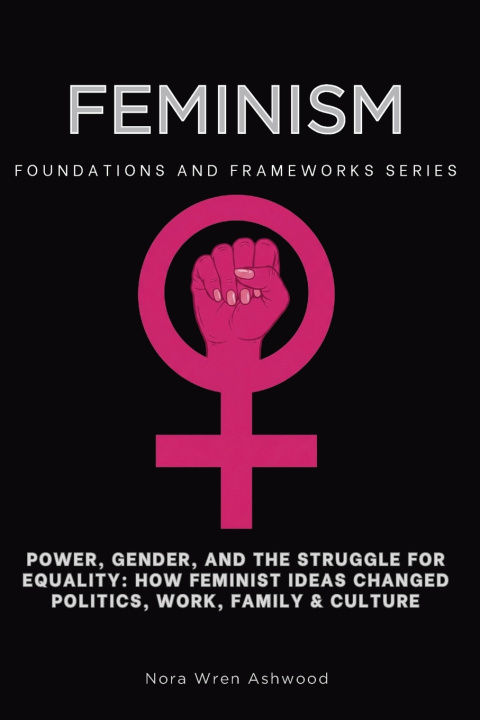
Feminism, Foundations and Frameworks Series
Power, Gender, and the Struggle for Equality: How Feminist Ideas Changed Politics, Work, Family & Culture
 Englisch
 36 b
36 b
 Demnächst
 Neu
Neu
Bis zu 30 Tage Rückgaberecht

Feminism, explained without the caricatures. This introduction sets out what feminists actually argue, where those arguments came from, and how they reshaped politics, work, family life, law, and culture.
The subject is treated as a set of ideas you can examine, question, and test against evidence. Some of those ideas have broad agreement behind them. Others split feminists into camps that still argue with each other, and you get both the shared ground and the fights. Ten chapters move through the history first, then organize the second half by theme, so you can read straight through or start with the chapter you need.
What's covered:
- Sex, gender, patriarchy, and why equality and equity ask for two different things
- Mary Wollstonecraft in 1792, the Seneca Falls Convention of 1848, the suffrage campaigns in Britain and the United States, and how the abolition and women's rights movements collided and then split
- Betty Friedan, the National Organization for Women, consciousness-raising groups, the Equal Rights Amendment campaign, and Roe v. Wade
- Intersectionality, Kimberle Crenshaw's legal framework, the Combahee River Collective, and Chicana feminism
- The pay gap and what it does and does not measure, occupational segregation, the motherhood penalty, the fatherhood bonus, and the care work that keeps households running yet never shows up in a country's economic numbers
- Coverture, no-fault divorce, the second shift, Catharine MacKinnon's dominance theory, Meritor Savings Bank v. Vinson, and the Violence Against Women Act
- Laura Mulvey's male gaze, how advertising sold a version of womanhood after the 1950s, and how Riot Grrrl shouted back
- The 1995 Beijing conference and the arguments that follow when Western assumptions meet local realities, then MeToo, organized online harassment, and the live fights over sex work and platform regulation
Written for three readers in particular:
- Students meeting these ideas in a course
- General readers who want the arguments behind the headlines
- Anyone in a workplace or family these debates already touch, which covers most of them
No background in gender studies or political theory is assumed. Where critics have raised serious objections, those objections appear stated fairly rather than knocked down with easy answers, so you can finish convinced, unconvinced, or somewhere in the middle and still know the material cold.
Each chapter closes with a discussion question, and worked example answers at the back let you check your thinking against a full response instead of guessing whether you got the idea right. A glossary defines every term the book uses, including patriarchy, coverture, comparable worth, carceral feminism, and the Bechdel test. The reading list points to the original sources, including Wollstonecraft's writing from 1792 and recent academic studies, so you can go past this book and read the thinkers in their own words.


Informationen zum Buch
Englisch
