
 Kontakt
 Wie einkaufen

Versand
Kaufberater
 Englisch
 45 b
 Neu
Bis zu 30 Tage Rückgaberecht

On a sandstone spur above the Norman bocage, four hundred and eighty million years of geology shaped the course of medieval Europe, and almost no one in the English-speaking world knows its name.
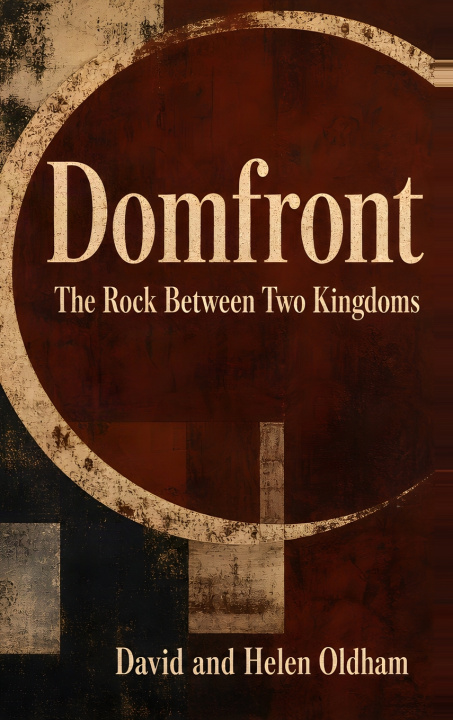
Domfront: The Rock Between Two Kingdoms is a richly layered narrative history of one of Normandy's most strategically vital yet overlooked places. Perched on a dramatic cliff above the river Varenne, the town of Domfront commanded the contested borderlands between Normandy and Maine for centuries, drawing kings, saints, and chroniclers to a rock that geology, almost carelessly, made indefensible to ignore.
David and Helen Oldham open with a panorama that doubles as an argument: stand in the castle gardens and the entire history of the place is visible at once, written into the landscape itself. The fault line beneath your feet, the cluse carved by the river below, the bocage stretching seventy kilometres to the horizon, all of it is history made physical. The book then traces an unbroken narrative thread from the Precambrian bedrock to the Liberation of 1944, connecting each layer of time to the one below it with the rigour of scholarship and the pleasure of good storytelling.
The cast is extraordinary for a town so little visited. A sixth-century hermit called Front, wandering alone through Armorican forest, gave the place its name and its first Christian identity. Guillaume Talvas, whose savagery at a wedding feast was recorded with visible disgust even by a medieval chronicler, embodied the brutal frontier culture from which the town's early Norman history grew. Thomas Becket, Eleanor of Aquitaine, and Henry II all passed through or corresponded from Domfront during some of the most consequential years of Plantagenet power. And the bocage that sheltered Front's wandering community in the sixth century sheltered Allied and German soldiers alike in the summer of 1944, its hedgerows as indifferent to century as to side.
What makes Domfront distinctive is its dual purpose. It is simultaneously a serious work of narrative micro-history, forensic in its attention to the geological and political forces that made this place matter, and a practical companion for visitors who want to move through the town with informed eyes. Site by site, layer by layer, the book gives the curious traveller the tools to read Domfront as it deserves to be read: not as a picturesque detour but as a place where the foundations of both English and French identity were, in part, laid down.
The first English-language book dedicated solely to Domfront, it fills a genuine gap in Anglophone coverage of Norman provincial history, written for readers who find history most compelling when it can be touched, walked, and seen.
For readers who love narrative non-fiction rooted in landscape and place, micro-histories that use a single location as a lens on the sweep of European history, and travel companions that reward intellectual curiosity as much as sightseeing, Domfront is an essential and long-overdue companion to one of Normandy's great hidden stories.


Informationen zum Buch
Englisch

Verschenken Sie dieses Buch noch heute
Es ist ganz einfach
1 Legen Sie das Buch in Ihren Warenkorb und wählen Sie den Versand als Geschenk 2 Wir schicken Ihnen umgehend einen Gutschein 3 Das Buch wird an die Adresse des beschenkten Empfängers geliefertHallo! Ich bin Libroamiko, dein Buchberater.
Wie kann ich dir helfen?