
 Kontakt
 Wie einkaufen

Versand
Kaufberater
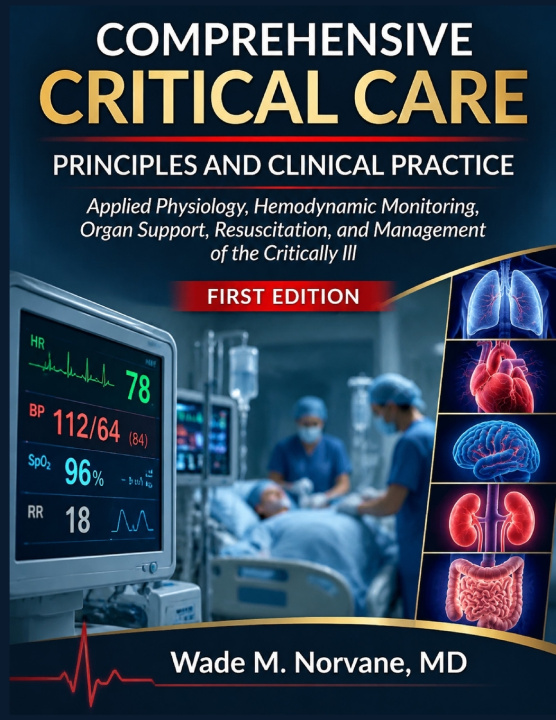
COMPREHENSIVE CRITICAL CARE
PRINCIPLES AND CLINICAL PRACTICE: Applied Physiology, Hemodynamic Monitoring, Organ Support, Resuscitation, and Management of the Critically Ill
 Englisch
 462 b
 Demnächst
 Neu
Bis zu 30 Tage Rückgaberecht

Critical care medicine demands a thorough understanding of human physiology, rapid clinical assessment, advanced monitoring, and the ability to make timely decisions in complex, life-threatening situations. Comprehensive Critical Care: Principles and Clinical Practice provides an extensive clinical reference to the scientific foundations, practical techniques, and evidence-informed approaches used in modern intensive care medicine.
Organized into eight comprehensive parts and twenty-one chapters, this textbook explores the full spectrum of critical care, from the organization of intensive care services and applied physiology to advanced organ support, emergency resuscitation, and long-term recovery.
The book covers essential areas of contemporary intensive care, including:
- Foundations of Critical Care: ICU organization, severity scoring, clinical prognostication, quality improvement, and applied physiology of critical illness.
- Respiratory Critical Care: Airway management, acute respiratory failure, oxygen therapy, mechanical ventilation, ARDS, prone positioning, ECMO, and ventilator liberation.
- Cardiovascular Critical Care: Hemodynamic monitoring, shock recognition, fluid resuscitation, vasopressors, cardiogenic shock, cardiac arrest, and mechanical circulatory support.
- Sepsis and Infectious Diseases: Sepsis recognition, septic shock, antimicrobial strategies, multidrug-resistant organisms, infection prevention, and antimicrobial stewardship.
- Neurologic Critical Care: Coma assessment, intracranial pressure management, traumatic brain injury, stroke, status epilepticus, sedation, and ICU delirium.
- Renal, Metabolic, and Gastrointestinal Care: Acute kidney injury, renal replacement therapy, electrolyte disturbances, acid-base disorders, endocrine emergencies, hepatic failure, and nutritional support.
- Hematology and Special Emergencies: Coagulation disorders, transfusion strategies, trauma, burns, toxicology, environmental emergencies, and critical care for special populations.
- Ethics and Recovery: Goals-of-care discussions, end-of-life decisions, palliative care integration, family communication, clinician well-being, and post-intensive care syndrome.
Designed for intensivists, critical care physicians, anesthesiologists, emergency medicine specialists, ICU nurses, respiratory therapists, residents, fellows, and medical trainees, this comprehensive reference connects fundamental scientific principles with the practical demands of intensive care.
Whether used for clinical reference, professional development, postgraduate education, or systematic review, this book offers a structured foundation for understanding and managing critically ill patients across the modern intensive care environment


Informationen zum Buch
Englisch

Verschenken Sie dieses Buch noch heute
Es ist ganz einfach
1 Legen Sie das Buch in Ihren Warenkorb und wählen Sie den Versand als Geschenk 2 Wir schicken Ihnen umgehend einen Gutschein 3 Das Buch wird an die Adresse des beschenkten Empfängers geliefertHallo! Ich bin Libroamiko, dein Buchberater.
Wie kann ich dir helfen?