
 Kontakt
 Wie einkaufen
Versand
Kaufberater
 Englisch
 548 b
548 b
Bis zu 30 Tage Rückgaberecht
Kunden kauften auch



 /
/
 Broschur
 8.69
€
8.69
€








 /
Broschur
24.89
€
/
Broschur
24.89
€
 /
Hardcover
310.99
€
/
Hardcover
310.99
€




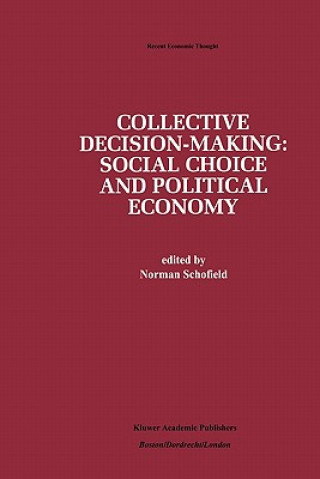
In the last decade the techniques of social choice theory, game theory and positive political theory have been combined in interesting ways so as to pro vide a common framework for analyzing the behavior of a developed political economy. Social choice theory itself grew out of the innovative attempts by Ken neth Arrow (1951) and Duncan Black (1948, 1958) to extend the range of economic theory in order to deal with collective decision-making over public goods. Later work, by William Baumol (1952), and James Buchanan and Gordon Tullock (1962), focussed on providing an "economic" interpretation of democratic institutions. In the same period Anthony Downs (1957) sought to model representative democracy and elections while William Riker (1962) made use of work in cooperative game theory (by John von Neumann and Oscar Morgenstern, 1944) to study coalition behavior. In my view, these "rational choice" analyses of collective decision-making have their antecedents in the arguments of Adam Smith (1759, 1776), James Madison (1787) and the Marquis de Condorcet (1785) about the "design" of political institutions. In the introductory chapter to this volume I briefly describe how some of the current normative and positive aspects of social choice date back to these earlier writers.


Informationen zum Buch
Englisch

Verschenken Sie dieses Buch noch heute
Es ist ganz einfach
1 Legen Sie das Buch in Ihren Warenkorb und wählen Sie den Versand als Geschenk 2 Wir schicken Ihnen umgehend einen Gutschein 3 Das Buch wird an die Adresse des beschenkten Empfängers geliefertDas könnte Sie auch interessieren




















Hallo! Ich bin Libroamiko, dein Buchberater.
Wie kann ich dir helfen?