
 Kontakt
 Wie einkaufen
Versand
Kaufberater
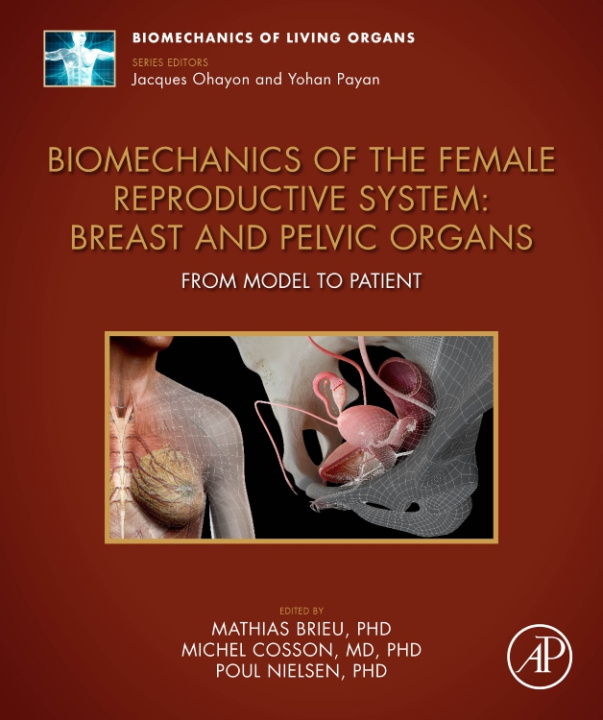
Biomechanics of the Female Reproductive System: Breast and Pelvic Organs
From Model to Patient
 Englisch
 477 b
477 b
Bis zu 30 Tage Rückgaberecht
Kunden kauften auch

 /
/
 Broschur
 22.99
€
22.99
€



 /
Broschur
12.30
€
/
Broschur
12.30
€










Biomechanics of the Female Reproductive System: Breast and Pelvic Organs, From Models to Patients provides an opportunity for students, researchers, clinicians and engineers to study the main topics related to biomechanics of the reproductive system in a single book written by a global base of experts. Reproductive system biomechanics is an interdisciplinary area of research, and this book takes an interdisciplinary view, pulling in perspectives from both engineering and medicine. This book encompasses a wide range of topics from basic sciences (Anatomy, Biology, Remodeling of tissue, Continuum mechanics, Image analysis, numerical simulation) to clinical applications, to the design of medical devices and clinical interventions, including surgical procedures.This book is the first to synthesize complementary advances in reproductive biomechanics; medical imaging analysis, patient-specific characterization and computational finite element models are covered. It discusses all the biomechanical aspects related to breast and female pelvic floor system at each step of its development. The table of contents also covers certain events and diseases: cancers, delivery, aging, and breast, hysterectomy, prolapse surgery. This book presents the main biomechanical experimental results obtained and models developed this last decade, to highlight the importance of accounting patient specific history and aging characteristics to consider damage growth effect and impact. It is a new volume in Elsevier’s Biomechanics of Living Organs series. Introduces fundamental aspects of breast and pelvic floor Anatomy, Physiology, and Physiopathology Covers the most recent imaging techniques (such as image analysis reconstruction, elastography, tagged MRI, nondestructive inverse methods) developed to characterize patient-specific anatomy and mechanical properties characteristics Discusses the main computational studies performed this last decade, for modeling the delivery process and potential induced injury


Informationen zum Buch
Englisch

Verschenken Sie dieses Buch noch heute
Es ist ganz einfach
1 Legen Sie das Buch in Ihren Warenkorb und wählen Sie den Versand als Geschenk 2 Wir schicken Ihnen umgehend einen Gutschein 3 Das Buch wird an die Adresse des beschenkten Empfängers geliefertDas könnte Sie auch interessieren









 /
/
 Spiel
69.59
€
Spiel
69.59
€












Hallo! Ich bin Libroamiko, dein Buchberater.
Wie kann ich dir helfen?