
 Kontakt
 Wie einkaufen
Versand
Kaufberater
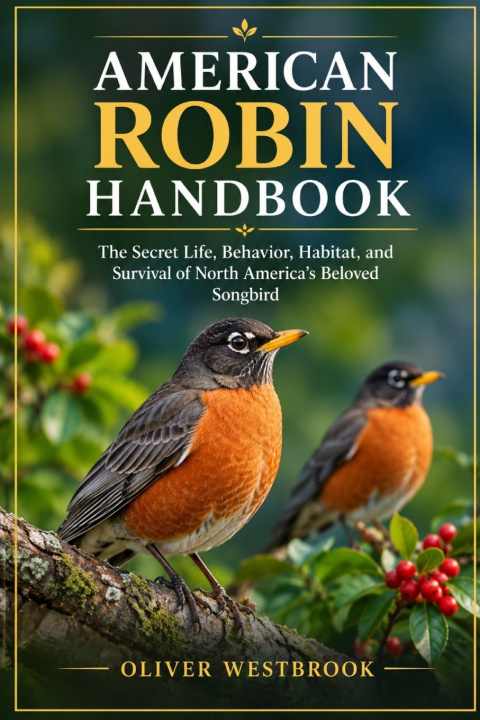
AMERICAN ROBIN HANDBOOK
The Secret Life, Behavior, Habitat, and Survival of North America's Beloved Songbird
 Englisch
 37 b
37 b
 Demnächst
 Neu
Neu
Bis zu 30 Tage Rückgaberecht

The American Robin is one of North America's most familiar and adaptable birds. With its distinctive orange-red breast, grayish-brown back, bright eyes, and clear musical song, it has become a recognizable presence in forests, gardens, parks, farms, suburbs, and cities.
Throughout this handbook, we have explored the remarkable life of the American robin, from its physical characteristics and habitat to its diet, communication, breeding, migration, behavior, and survival strategies.
The robin's adaptability is one of its greatest strengths. It can use many different environments and adjust its feeding habits according to seasonal conditions. During warmer months, insects, earthworms, and other invertebrates provide important sources of nutrition. When these foods become less available, fruits and berries become increasingly valuable.
Its song is another defining feature. Robins use songs and calls to communicate, defend territories, attract mates, warn others of danger, and maintain social contact. Their communication system works together with body movements and other behaviors.
Breeding is an intensive period in the robin's life. Adults select suitable nesting locations, build nests, protect their territories, incubate eggs, and provide food for rapidly growing young. The famous blue eggs and the devoted care given to nestlings are among the most recognizable features of the species.
Young robins face many challenges as they develop. They must eventually learn to fly, find food, recognize danger, and navigate their surroundings. Leaving the nest is only the beginning of their journey toward independence.
Migration and seasonal movement are also flexible. Not every American robin follows the same pattern. Some populations travel considerable distances, while others remain in relatively local areas when food and weather conditions permit. Seasonal changes in insects, earthworms, fruits, temperature, and habitat strongly influence these movements.
Despite their success, robins face predators, severe weather, habitat loss, pesticides, window collisions, vehicles, and domestic animals. Their adaptability provides considerable protection, but it does not make them invulnerable.
People can help by preserving mature trees, planting diverse vegetation, reducing unnecessary pesticide use, keeping pets from hunting wildlife, making windows safer, and protecting nesting birds from unnecessary disturbance.
Ultimately, the American robin represents resilience and adaptability. Its familiar presence can sometimes make it easy to overlook how complex its life really is. Beneath the ordinary sight of a robin walking across a lawn lies a highly capable wild bird with sophisticated behaviors, demanding family responsibilities, seasonal challenges, and an important role in the ecosystem.
Understanding the American robin encourages us to look more carefully at the wildlife around us. By appreciating its life and protecting the habitats it depends on, we can help ensure that its distinctive song continues to be part of North America's natural soundscape for generations to come.


Informationen zum Buch
Englisch
Kategorie

Verschenken Sie dieses Buch noch heute
Es ist ganz einfach
1 Legen Sie das Buch in Ihren Warenkorb und wählen Sie den Versand als Geschenk 2 Wir schicken Ihnen umgehend einen Gutschein 3 Das Buch wird an die Adresse des beschenkten Empfängers geliefertHallo! Ich bin Libroamiko, dein Buchberater.
Wie kann ich dir helfen?