
 Kontakt
 Wie einkaufen
Versand
Kaufberater
America
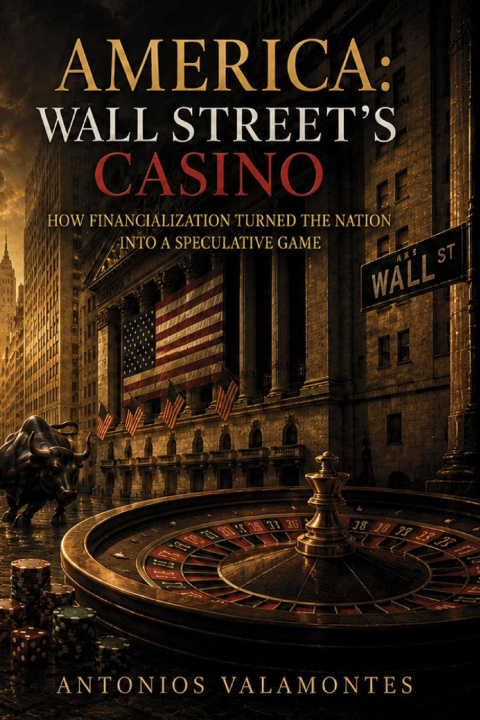
Wall Street's Casino: How Financialization Turned the Nation into a Speculative Game
 Englisch
 58 b
58 b
 Neu
Neu
Bis zu 30 Tage Rückgaberecht

When does finance stop serving the economy-and start running it?
America: Wall Street's Casino traces the transformation of American finance from the early securities markets of Alexander Hamilton's republic to the highly leveraged, algorithmic, politically connected financial system of the twenty-first century.
The story begins with public credit, the Buttonwood Agreement, railroad speculation, banking panics, and the crash of 1929. It follows the regulatory architecture created by the New Deal, the relative financial stability of the postwar decades, and the gradual dismantling of that system through deregulation, financial innovation, and changing political incentives.
From junk bonds and leveraged buyouts to the dot-com bubble, mortgage securitization, the 2008 financial crisis, too-big-to-fail institutions, high-frequency trading, private equity, retail speculation, shadow banking, and cryptocurrency, the book asks a consistent question: when does useful financial intermediation become a mechanism for transferring risk and wealth while preserving private gains?
The argument is not that finance is inherently destructive. Banks, markets, credit, investment, and risk transfer are indispensable to a productive economy. The danger emerges when leverage becomes extreme, incentives reward short-term extraction, complexity conceals risk, and losses can be shifted onto workers, creditors, communities, taxpayers, or the broader economy.
Drawing on financial history, regulatory records, economic research, crisis investigations, and documented case studies, America: Wall Street's Casino examines how the United States repeatedly moved from speculation to crisis, from crisis to reform-and then gradually back again.
It is ultimately a history of American capitalism's uneasy relationship with finance, and an argument for restoring the financial system to its most important purpose: serving productive enterprise rather than becoming an end in itself.


Informationen zum Buch
Englisch
