
 Kontakt
 Wie einkaufen

Versand
Kaufberater
 Englisch
 164 b
 Demnächst
 Neu
Bis zu 30 Tage Rückgaberecht

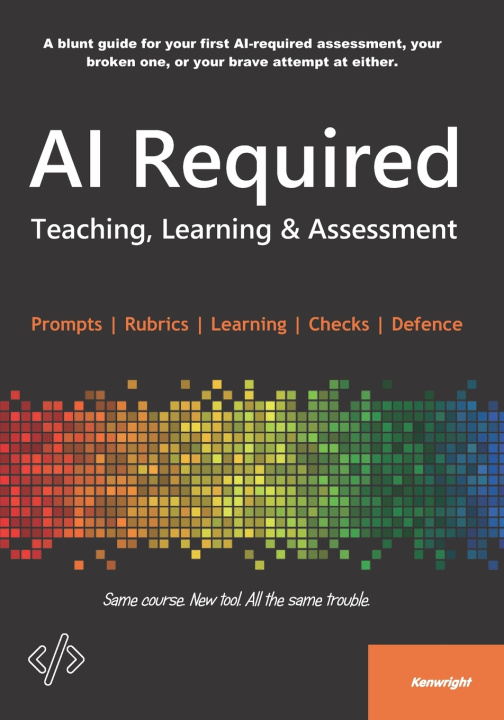
We've ignored AI long enough. Permission slips won't fix this. This book shows you how to make AI integral to learning-and how to prove the thinking is still theirs.
For years, higher education has run on the same assumptions: same reading list, same closed-book exam, same expectation that students do everything from scratch-read the full 800-page textbook, write the essay, solve the problem, and somehow prove it was all theirs. We've mostly ignored AI: hoped it was a phase, assumed it didn't touch our classrooms, or told ourselves students wouldn't dare. They did. They are. And while we weren't looking, the assessment we've been defending stopped measuring what we think it measures.
That's not a moral failing. It's a design gap. But let's be honest: the fortress of policies, detectors, and rewritten exam questions isn't working either. Honest students are confused about what's allowed. The cynical ones are already through the wall. And the rest of us are spending our evenings squinting at chat logs like detectives on a bad TV show-which, with love, is not why any of us got into this job.
The wall was hiding something: a category of teaching and assessment that was already a bit hollow. The three-hour closed-book exam. The essay nobody could verify. The lecture where the only AI in the room was in the student's pocket while we pretended otherwise. We told ourselves the exam measured understanding. Mostly it measured recall under fluorescent lighting and mild panic. And nobody in any job you'd want your students to have sits in a locked room with no resources and no collaborators and produces their best thinking. That's not the job. That's the opposite of the job.
So here's the flip-and it's a genuine one. This book is not about saying "you can use AI" and changing nothing else. It's about making AI an integral part of the learning and the assessment: the instrument you teach with, the sparring partner students argue with, the thing they must operate, critique, correct, and defend. The submission isn't the AI's output. It's the student's judgment wrapped around the AI's output. What if the rule wasn't "don't use AI," but "you must use AI-and you must show me your thinking through it"?
This book covers the whole thing-not just the exam at the end. It's about the classroom as much as the assessment: teaching with AI as tutor, sparring partner, and critic; designing seminars and studios where the tool is in the room and nobody's pretending otherwise. It's about assessment across the disciplines-code, reports, research, maths, games, teamwork, dissertations, undergraduate and postgraduate. It's about small submission artefacts that make thinking visible without drowning you in chat logs: a two-minute viva, an annotated correction, a "rejected AI outputs" appendix, a short recorded walkthrough of a debugging fix. You mark the judgment, not the log.
And yes, it covers the unglamorous, load-bearing stuff nobody puts in the keynote: verification, collusion, contract cheating, data protection, and policy-because a book called AI Required that can't answer "how do you know?" isn't brave. It's naive.
This book will annoy you if you're still policing chat logs. Good. It should. If you want comfort, look elsewhere. If you want assessment that survives an external examiner, prepares students for real work, and finally measures the right thing, pull up a chair.
What you'll get:
A practical case for making AI integral to learning and assessment-not merely permitted alongside the old model
Lean assessment designs that are faster to mark than the essays they replace
Ways to verify the person, not just detect the text
Honest chapters on data protection, collusion, contract cheating, and policy


Informationen zum Buch
Englisch

Verschenken Sie dieses Buch noch heute
Es ist ganz einfach
1 Legen Sie das Buch in Ihren Warenkorb und wählen Sie den Versand als Geschenk 2 Wir schicken Ihnen umgehend einen Gutschein 3 Das Buch wird an die Adresse des beschenkten Empfängers geliefertHallo! Ich bin Libroamiko, dein Buchberater.
Wie kann ich dir helfen?