Kontakt
 Wie einkaufen
Versand
Kaufberater
 Englisch
 333 b
333 b
30 Tage für die Rückgabe der Ware
Kunden kauften auch









 /
/
 Hardcover
 35.19
€
35.19
€

















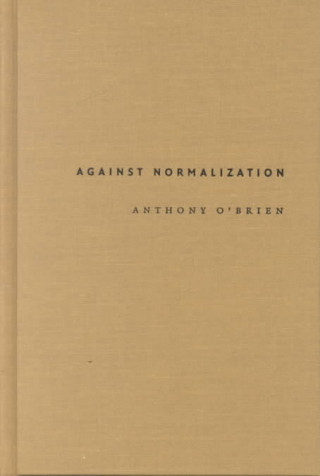
At the end of apartheid, under pressure from local and transnational capital and the hegemony of Western-style parliamentary democracy, South Africans felt called upon to normalize their conceptions of economics, politics, and culture in line with these Western models. In "Against Normalization", however, Anthony O'Brien examines recent South African literature and theoretical writings that resist this neocolonial outcome. To investigate the role of culture in the formation of a more radically democratic society, O'Brien brings together an unusual array of contemporary South African writing: cultural theory and debate, worker poetry, black and white feminist writing, Black Consciousness drama, the letters of exiled writers, and postapartheid fiction and film. Paying subtle attention to well-known figures like Nadine Gordimer, Bessie Head, and Njabulo Ndebele yet foregrounding less-studied writers like Ingrid de Kok, Nise Malange, Maishe Maponya, and the Zimbabwean Dambudzo Marechera, O'Brien reveals in their work the construction of a political aesthetic more radically democratic than the current cultural normalization of nationalism, ballot-box democracy, and liberal humanism. Juxtaposing readings of these writers with the theories of race, gender, and nation expressed by such postcolonial thinkers as Paul Gilroy, bell hooks, and Gayatri Spivak, and by others such as Samuel Beckett and Vaclav Havel, O'Brien adopts a uniquely comparatist and internationalist approach to understanding South African writing and its relationship to the cultural settlement after apartheid. With its appeal to specialists in South African fiction, poetry, history, and politics, to other Africanists, and to those in the fields of colonial, postcolonial, race, and gender studies, "Against Normalization" will make a significant intervention in the debates about cultural production in the postcolonial areas of global capitalism.


Informationen zum Buch
Englisch

Verschenken Sie dieses Buch noch heute
Es ist ganz einfach
1 Legen Sie das Buch in Ihren Warenkorb und wählen Sie den Versand als Geschenk 2 Wir schicken Ihnen umgehend einen Gutschein 3 Das Buch wird an die Adresse des beschenkten Empfängers geliefertDas könnte Sie auch interessieren


 /
Broschur
44.39
€
/
Broschur
44.39
€





 /
Broschur
40.19
€
/
Broschur
40.19
€
 /
Broschur
18.99
€
/
Broschur
18.99
€



 /
Hardcover
11.39
€
/
Hardcover
11.39
€